The #1 Food for Gut Health Isn't a Fruit or Vegetable — It's Beans
EatingWell asked the experts and the answer wasn't kale, berries, or yogurt — it was beans. Here's why beans quietly outperform almost every other gut-health food, and how to eat more of them without the bloating that scares people off.
Beans. When gastroenterologists and registered dietitians are asked to name one food for gut health, beans keep winning: one cup of cooked beans delivers roughly 12–15 grams of fiber, plus resistant starch and plant protein — the exact trio your gut bacteria ferment into compounds that support digestion, blood sugar, and fullness.
Every year there's a new 'best food for your gut' headline. Kale had its decade. Blueberries had their moment. Kefir and kimchi are having theirs now — and fermented foods genuinely deserve the attention, as we wrote in our guide to kimchi and fermented foods.
So it raised eyebrows this month when EatingWell, in an RD-reviewed piece, asked gastroenterologists to name the single best food for gut health — and the winner wasn't a fruit or a vegetable at all. It was beans.
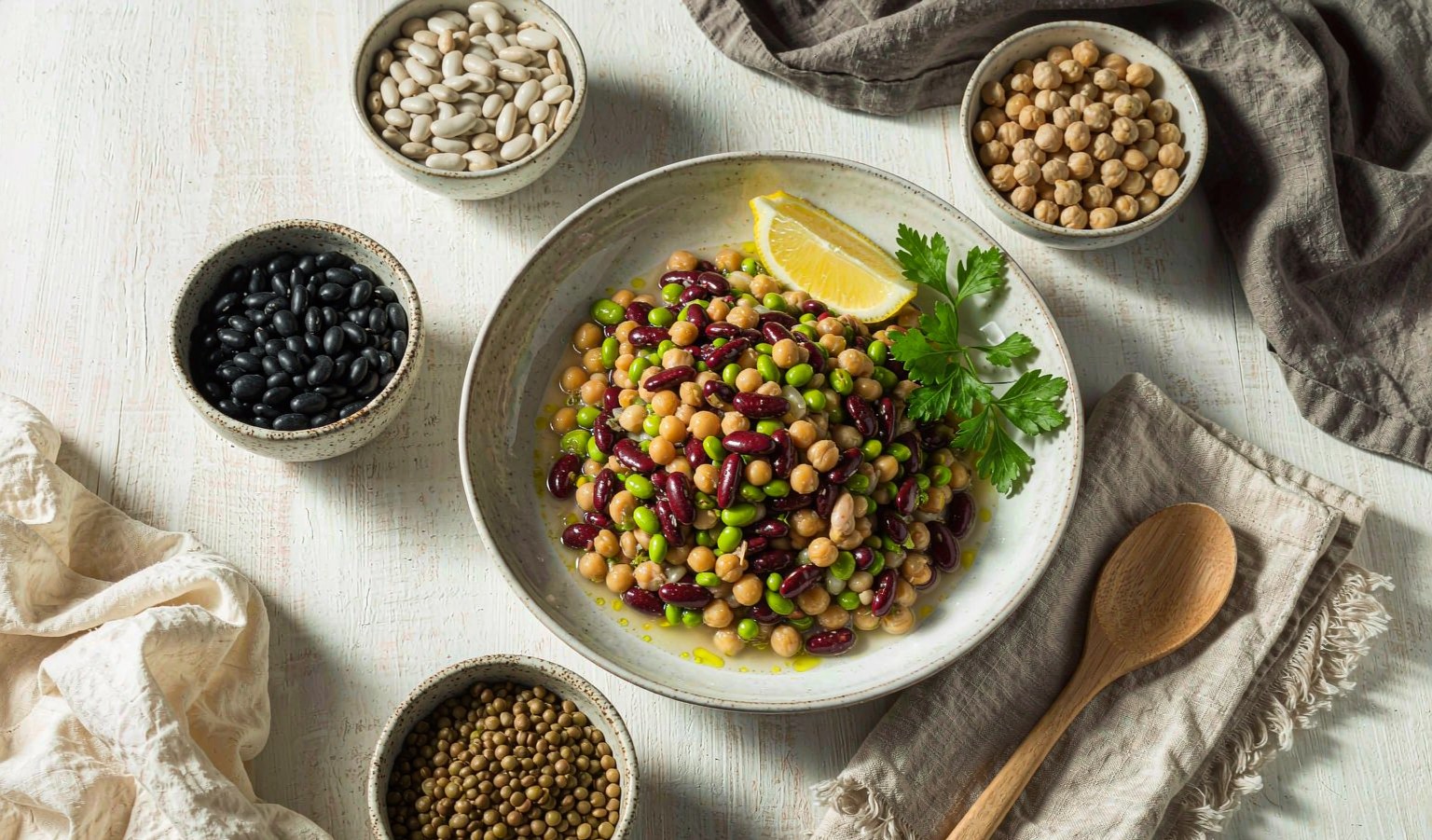
Not a supplement. Not a $9 juice. Beans: black beans, lentils, chickpeas, white beans — the cheapest item in the grocery store. Here's why the experts are right, what beans actually do inside your gut, and how to add them to your plate without regretting it an hour later.
Why Beans Win: Three Tools in One Food
Most gut-health foods do one job. Yogurt brings live bacteria. Vegetables bring bulk. Beans are unusual because they bring three things at once.
1. Fiber — a lot of it. One cup of cooked black beans has about 15 grams of fiber; lentils land around 15–16 grams; even a cup of white beans delivers roughly 12 grams. Compare that with the average American intake of about 15 grams per day. A single cup of beans can double a typical day's fiber. That matters because fiber intake is one of the most consistently supported levers in nutrition research: a landmark 2019 analysis in The Lancet, covering 185 studies, found that eating 25–29 grams of fiber a day was associated with 15–30% lower rates of several major chronic diseases compared with eating the least fiber.
2. Resistant starch. Beans are one of the richest everyday sources of resistant starch — the fraction of starch that resists digestion in the small intestine and arrives in the colon intact, where gut bacteria ferment it. That fermentation produces short-chain fatty acids, including butyrate, the preferred fuel of your colon lining and a player in appetite signaling. Cook beans and then cool them — a bean salad, a chilled lentil soup — and the resistant starch content rises further. We keep a full list of sources in our resistant starch foods list.
3. Protein. A cup of black beans also carries about 15 grams of plant protein. Protein is the macronutrient that most strongly stimulates your body's own GLP-1 release, and it's the nutrient people eating less — including many people on GLP-1 medications — most often under-consume. Fiber plus protein in the same bite is exactly the combination that keeps you full. It's why beans show up in nearly every conversation about eating less without feeling deprived, including our piece on why fiber matters more when you eat less.
No other single, cheap, shelf-stable food checks all three boxes.
What the Research Actually Says
It's worth separating the headline from the evidence, because 'best food for gut health' is a phrase nutrition science rarely uses. What the research does support is a consistent pattern: higher fiber intake is associated with better digestive and metabolic outcomes across large populations, and fermentable fibers change the gut environment in measurable ways. Beans sit right at the intersection of both findings.
The 2019 Lancet series is the strongest population-level evidence. Pooling 185 studies, Reynolds and colleagues reported that people eating 25–29 grams of fiber a day had 15–30% lower rates of several major chronic conditions than the lowest-fiber groups. That is an association, not proof that any one food is responsible — the authors were explicit about the limits of observational data — but the dose is strikingly close to what a single cup of beans can add to a typical American day. A 2013 review in Nutrients by Slavin reached a similar place by a different route, describing fiber and prebiotics as substrates the gut microbiota ferment rather than as active drug-like compounds.
On the mechanism side, a 2021 Stanford trial published in Cell (Wastyk and colleagues) put healthy adults on either a high-fiber or a high-fermented-food diet and tracked their microbiome and immune markers over several weeks. The two diets behaved differently: fermented foods increased microbial diversity and lowered several inflammatory markers, while the high-fiber arm shifted the community's capacity to break down carbohydrates. Neither group changed overnight, and the authors were careful about what any of it predicts for one person. The honest takeaway is narrower and more useful: fiber feeds a pathway the gut already runs, and beans deliver that fiber more cheaply than almost anything else in the aisle.
The Catch Everyone Knows About: Gas
Let's be honest about why beans have an image problem. Beans contain oligosaccharides — fermentable carbohydrates your own enzymes can't break down, so your gut bacteria do it for you, and gas is a by-product. For people already dealing with bloating, that's a real deterrent.
But the research and clinical experience point the same way: the gas is mostly a starting-dose problem, not a permanent one. Gut bacteria adapt to a regular bean habit within a few weeks, and tolerance improves. The practical playbook:
- Start small. Begin with a quarter to a half cup, a few times a week, not a giant burrito on day one.
- Lentils first. Red and brown lentils are typically the gentlest entry point — no soaking required, and they cook fast.
- Rinse canned beans. Draining and rinsing canned beans washes away some of the gas-producing compounds (and a good share of the sodium).
- Chew and slow down. It sounds too simple, but a meaningful share of 'bean bloating' is swallowed air and rushed meals — the same mechanics behind a lot of everyday bloating.
- Build, don't binge. Daily small portions train your microbiome better than one huge serving a week.
If beans cause persistent pain or symptoms that don't settle after a few weeks of gradual introduction, that's worth a conversation with your doctor or dietitian — especially if you have IBS or follow a low-FODMAP plan, where portions and bean types need more care.
Five Easy Ways to Actually Eat More Beans
Advice fails when it ignores real life, so here are swaps that require almost no new cooking:
- 1. Soup upgrade. Stir a can of white beans into any tomato, vegetable, or chicken soup. They disappear into the background and add ~6 grams of fiber per half cup.
- 2. Taco math. Go half ground meat, half black beans in tacos and burrito bowls. Same satisfaction, more fiber, lower grocery bill.
- 3. The cooled bean salad. Cooked-then-chilled beans with olive oil, lemon, and herbs. The cooling step bumps up resistant starch — the same trick that works for cooled potatoes and rice.
- 4. Hummus counts. Chickpeas are beans. A quarter cup of hummus with vegetables is a legitimate fiber snack, not a compromise.
- 5. Blend them invisible. Blend white beans into pasta sauce or a smoothie base. The flavor vanishes; the fiber doesn't.
Beans and the Body's Own GLP-1 Pathway
There's a reason beans keep appearing in conversations about appetite, and it isn't marketing. Protein is the macronutrient that most strongly stimulates your body's own GLP-1 release after a meal, and beans deliver roughly 15 grams of it per cup alongside their fiber. The fiber half works further downstream: when resistant starch reaches the colon, gut bacteria ferment it into short-chain fatty acids such as butyrate and acetate, which are involved in the signaling that helps a meal feel satisfying for longer. None of this is fast, and none of it is pharmaceutical.
The effect is modest and gradual, and it is not a substitute for medication — a point we make plainly in our guide to food noise and natural GLP-1. But it explains why a cheap, filling food keeps coming up when clinicians talk about eating less without feeling deprived: fiber and protein arrive in the same bite, and the gut does the rest slowly. If you want the numbers behind resistant starch dosing, we walk through them in our resistant starch guide.
Where Beans Fit in the Bigger Picture
Beans aren't magic, and no single food fixes a gut. What they are is the highest-leverage habit most people are missing — which is probably why the experts picked them. The average American gets about half the recommended fiber, and beans close that gap faster than any other ordinary food.
Beans first, food first, always. Our own product is built for the same routine: GLP-1 Support* Capsules — a gut-first, plant-powered daily capsule with botanicals (hops, lemon, green tea), an 8-strain probiotic blend, and B-vitamins in a 30-in-1 formula. Three capsules with breakfast, no mixing. Contains no GLP-1 or semaglutide — and it is not a fiber supplement; the fiber still has to come from food.
If you take one thing from the gastroenterologists' pick, make it this: before buying anything exotic for your gut, check whether the cheapest food in the store is missing from your week. For most of us, it is — and that's fixable by Friday.
References
- EatingWell (November 2026). 'The #1 Food for Gut Health Isn't a Fruit or Vegetable — It's This.' (RD-reviewed; gastroenterologists name beans: fiber + resistant starch + prebiotics, ~12 g fiber per cup of white beans.)
- Reynolds, A. et al. (2019). Carbohydrate quality and human health: a series of systematic reviews and meta-analyses. The Lancet, 393(10170), 434–445. (Fiber intakes of 25–29 g/day associated with 15–30% lower incidence of several chronic diseases.)
- USDA FoodData Central. Nutrient profiles: black beans, lentils, white beans, chickpeas (cooked, per cup).
- Wastyk, H. C. et al. (2021). Gut-microbiota-targeted diets modulate human immune status. Cell, 184(16), 4137–4153. (Stanford trial: high-fiber and fermented-food diets affect the microbiome and inflammation differently.)
- Slavin, J. (2013). Fiber and prebiotics: mechanisms and health benefits. Nutrients, 5(4), 1417–1435.
This article is for educational purposes only and is not medical advice. If you have IBS, follow a low-FODMAP plan, or have ongoing digestive symptoms, talk to your doctor or dietitian before making major changes to your fiber intake.
Frequently Asked Questions
Which beans are best for gut health?
Do beans really contain resistant starch?
Will eating beans every day cause bloating?
Are canned beans as good as dried?
Keep Reading
What “GLP-1 Friendly” on a Food Label Actually Means (and Doesn’t)
Grocery aisles are filling up with “GLP-1 friendly” foods. Food Dive calls the label a problem and Women’s Health is asking what it even means — so we read the fine print. Here’s how to tell a thoughtfully made product from a marketing sticker, in about ten seconds per label.
Read article →
Do GLP-1 Gummies, Patches and Drops Actually Work? An Honest Review
GLP-1 gummies, patches, and drops are everywhere — but none of them contains actual GLP-1. Here's what the evidence says about what's really inside them, why the delivery format can't work, and what food can honestly do instead.
Read article →