Losing Muscle on GLP-1? The Gut-Muscle Connection Nobody Mentions
New 2026 research shows people on GLP-1 medications move less, not more — and up to 39% of the weight lost can be lean mass. Here's the gut-muscle connection nobody talks about, and what to do about it.
GLP-1 medications can reduce appetite so much that protein intake and daily movement drop — a 2026 study found users walked 560 fewer steps per day. Since 25–39% of GLP-1 weight loss may be lean mass, protecting muscle takes deliberate protein, resistance training, and a gut that absorbs nutrients efficiently.
If you're losing weight on a GLP-1 medication, here's an uncomfortable question: how much of what you're losing is muscle?
New research presented at ENDO 2026 suggests the answer deserves more attention than it gets. In a study of 1,950 adults with obesity who started a GLP-1 medication, the 753 participants with enough Fitbit data didn't move more as the pounds came off — they moved less. Average daily steps fell from 5,047 to 4,487, a drop of about 560 steps per day, and moderate-to-vigorous activity fell by six minutes a day. The steepest declines showed up in men and in people with joint or muscle pain.
Read that again: the drug worked for weight loss, but daily movement went down, not up. That single finding reframes the whole conversation — because the question isn't only “am I losing weight?” but “what am I losing it from?”
Why eating less can quietly cost you muscle
GLP-1 medications curb appetite — that is the point. But a smaller appetite doesn't automatically select for protein. When every meal gets smaller, total protein intake often falls below what muscles need to maintain themselves, especially without resistance training to signal your body to keep lean tissue.
A 2026 meta-analysis of 20 randomized controlled trials (15,782 participants) estimated that roughly 25–39% of total weight lost on incretin-based therapies may be lean mass. One important nuance: lean mass is not the same as skeletal muscle — it includes water and organ tissue — but the signal is consistent enough that clinicians now flag body composition, not just the scale, as the metric that matters.
This is where the gut enters the story.
The gut-muscle connection: absorption matters more when you eat less
When you eat less, every bite carries more weight — literally. Your gut's ability to break down food and absorb amino acids, minerals, and vitamins becomes the bottleneck for everything downstream, including muscle maintenance.
Three gut-level factors decide how much of your protein actually reaches your muscles:
- Digestive efficiency. GLP-1 medications slow gastric emptying. Food sits longer, which helps satiety but can leave people feeling too full to eat enough protein — or digesting it less comfortably.
- The gut barrier. The intestinal lining is the gatekeeper for nutrient uptake. Fermentable fibers feed butyrate-producing bacteria, and butyrate is the preferred fuel for colon cells that maintain that barrier.
- Microbial balance. A diverse microbiome supports the enzymatic breakdown of food. Diets stripped down to tiny, repetitive meals can narrow that diversity over time.
None of this means fiber builds muscle directly — it doesn't. What it means is that a well-fed gut absorbs the protein you do eat more reliably, which matters most exactly when you're eating less.
Drug-induced vs. lifestyle weight loss: what the data show
Headline numbers need context. Proportional lean-mass loss is not unique to GLP-1 therapy — rapid weight loss from any cause, including strict dieting, costs lean tissue when protein and resistance training are missing. The difference is speed and appetite: GLP-1 medications can produce large deficits fast, which compresses the timeline your muscles have to adapt.
That cuts both ways. It means the countermeasures are the same ones sports nutrition has recommended for decades — they just matter more now. The same is true of the appetite side of the equation: just as prebiotic fiber quietly supports your body's own satiety signaling, as we covered in our natural GLP-1 explainer, the muscle side responds to steady, unglamorous inputs rather than dramatic ones.
A muscle-smart playbook (talk to your doctor first)
None of the following is exotic, and none of it is a substitute for medical guidance. But each item is a lever you can actually pull:
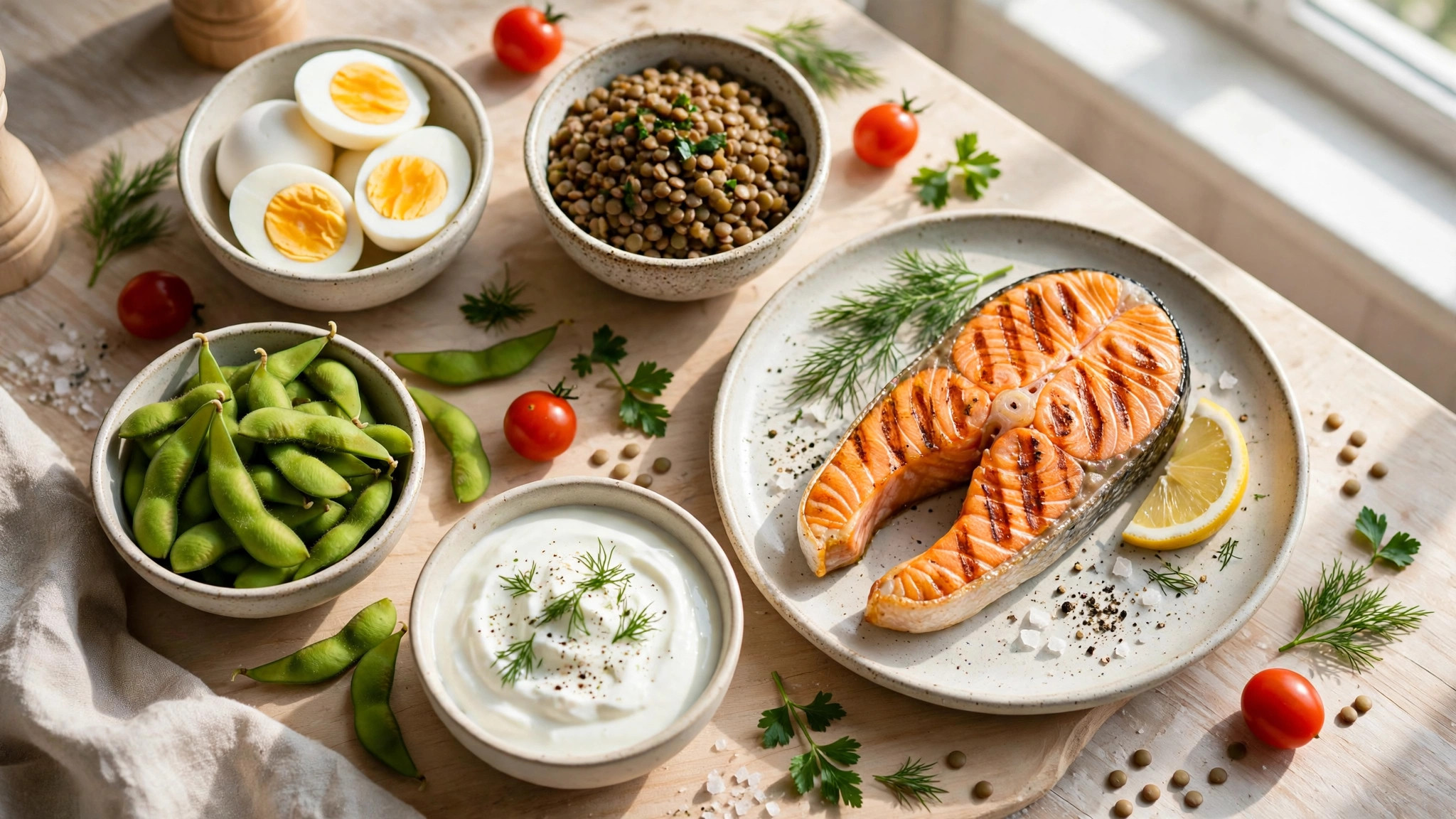
- Anchor protein. Aim for a palm-and-a-half of protein-rich food at each meal you do eat. When appetite is low, front-load protein before anything else on the plate.
- Train against resistance. Two to three short sessions a week — bands, dumbbells, bodyweight — signal your body to keep muscle. This matters more than step count for body composition.
- Feed your gut, not just your muscles. Fermentable fiber (beans, oats, cooled potatoes and rice, green bananas) supports the butyrate producers that keep your gut lining strong. If whole-food fiber is hard to tolerate in small meals, a prebiotic fiber source is one low-effort way to keep intake up.
- Walk anyway. The ENDO 2026 data are a warning, not a verdict. A 10-minute walk after meals supports both digestion and daily movement without demanding much appetite.
- Track beyond the scale. Strength, waist, and how your clothes fit tell you more about body composition than pounds alone.
For the fiber side of that list, the dosing question is worth getting right — our resistant starch dosing guide covers how much actually reaches the fermentation range, and our foods list shows which everyday ingredients deliver it.
Reading the signals: what muscle loss actually looks like
Muscle loss rarely announces itself. It doesn't hurt, it doesn't show up in a mirror the way fat loss does, and it is masked by exactly the thing you're celebrating — a falling number on the scale. That's what makes it easy to miss for months.
The signals worth watching are functional, not visual:
- Strength, not size. If the same weight feels heavier than it did a month ago — the grocery bags, the stairs, your usual dumbbells — that's a body-composition signal the scale can't give you.
- Grip and balance. Weaker grip and a little less steadiness are early, measurable signs of lean-tissue change, and they're easy to test at home.
- Clothes fitting differently than expected. If you've lost weight but your proportions barely moved, a larger share of that loss may not have been fat.
- Fatigue that outlasts the calorie deficit. Feeling drained well past the adjustment phase is a reason to talk to your physician, not to push harder.
One thing is not a useful signal: the number on the scale alone. It tells you the total changed, never the composition. If tracking helps you stay motivated, keep tracking — just add waist measurement, how clothes fit, and how strong you feel to the picture. Muscle is the tissue you want to keep, and it's the one the scale is worst at reporting.
Three mistakes that quietly accelerate lean-tissue loss
Most of the muscle lost on a GLP-1 isn't a failure of willpower — it's one of a few predictable patterns. Naming them makes them avoidable:
- Treating protein as optional on low-appetite days. When you can only finish half a meal, the half you finish is the one that matters. Protein first, every time, is the single highest-leverage habit on this list.
- Skipping resistance training because the deficit is “doing the work.” The medication handles appetite; it says nothing to your muscles. Without a resistance signal, the body has no reason to hold onto lean tissue during a deficit.
- Waiting until you reach goal weight to start. The longer a deficit runs without protein and resistance training, the more lean mass it costs — and rebuilding muscle after the fact is slower than protecting it in real time. Start the habits now, not at the finish line.
None of these require a perfect routine. Two short resistance sessions a week and a protein anchor at the meals you do eat are enough to change which tissue your body gives up.
Resistant starch and fiber: how the gut fits in
Fiber is the part of this conversation that surprises people, so it's worth being precise. Resistant starch does not build muscle, and it is not a protein source. What it does is feed the bacteria that produce butyrate — the short-chain fatty acid your gut-lining cells prefer as fuel — and a well-maintained gut lining is a better gatekeeper for the nutrients you're actually absorbing.
That matters because GLP-1 medications slow gastric emptying, and slower transit changes how comfortable eating protein feels. Building fiber gradually keeps that trade-off manageable rather than making meals feel heavier. Start with a smaller serving and give your microbiome a week or two to adjust; the same ramp that avoids bloating also keeps appetite for protein intact.
Note the honest limit: fiber is a supporting player here, not the headline. Protein and resistance training do the heavy lifting for muscle. The gut's job is to make sure the protein is available to be used — which becomes the binding constraint precisely when total intake is smallest. That's why the gentle prebiotic on-ramp and the dosing guide are worth reading together: one covers tolerance, the other covers how much fiber it takes to reach the range where fermentation actually produces meaningful short-chain fatty acids.
The bottom line
GLP-1 medications are powerful tools, and no one should feel judged for using them. But the scale doesn't tell you what you're losing. Pairing treatment with deliberate protein, resistance training, and a gut that absorbs efficiently is how you make sure the weight that comes off is the weight you wanted to lose.
This is gut science, not medical advice. If you have a digestive condition or take GLP-1 medication, check with your physician before changing your fiber intake or exercise routine.
References
- Maharjan, S. et al. (2026). Physical activity changes after GLP-1 initiation, All of Us Research Program wearable data. Presented at ENDO 2026, Endocrine Society.
- Eisa et al. (2026). Body composition changes with incretin-based therapies: meta-analysis of 20 randomized controlled trials (n = 15,782). Diabetes, Obesity and Metabolism.
- Endocrine News (2026). “VIDEO: Exercise Decreases Among People on GLP-1s.” endocrinenews.endocrine.org
If you're adding fiber for the first time, go gently — our prebiotic on-ramp covers starting without the bloat.
Frequently Asked Questions
How much muscle do people typically lose on GLP-1 medications?
Why do people on GLP-1s exercise less?
Does fiber help prevent muscle loss?
Should I eat more protein on a GLP-1?
Is this the same as a GLP-1 medication?
Keep Reading
What “GLP-1 Friendly” on a Food Label Actually Means (and Doesn’t)
Grocery aisles are filling up with “GLP-1 friendly” foods. Food Dive calls the label a problem and Women’s Health is asking what it even means — so we read the fine print. Here’s how to tell a thoughtfully made product from a marketing sticker, in about ten seconds per label.
Read article →
The #1 Food for Gut Health Isn't a Fruit or Vegetable — It's Beans
EatingWell asked the experts and the answer wasn't kale, berries, or yogurt — it was beans. Here's why beans quietly outperform almost every other gut-health food, and how to eat more of them without the bloating that scares people off.
Read article →